Contents:
- Reason 1: The Colour Is Too Flat or Too Far Off
- Reason 2: The Bonds or Wefts Are in the Wrong Place
- Reason 3: Too Much Hair Has Been Added
- Reason 4: The Attachment Points Are Visible
- Reason 5: The Texture Does Not Match
- Quick Cost Breakdown: Natural-Looking Extensions in 2026
- The Sustainability Connection
- Troubleshooting: What to Do When Extensions Look Obvious
- The colour is noticeably different from my natural hair
- The bonds are visible through the hair when it moves
- The extensions look thicker and heavier than the rest of my hair
- The extensions look obvious after I wash my hair
- The Consultation as the Foundation of a Natural Result
A survey conducted by a leading UK hair industry body in late 2025 found that over sixty per cent of people who had worn extensions at some point in their lives reported that someone had noticed them. Not in the admiring, “your hair looks amazing” way — in the “I can see the bonds through your hair” way. That is a striking statistic, given how sophisticated extension technology has become. The explanation is not that natural-looking extensions are impossible to achieve. It is that most wearers — and some salons — do not yet understand the specific, identifiable reasons why extensions become visible, and therefore do not know how to prevent it.
This guide addresses those reasons directly. Each section covers one of the core failure points, explains the mechanism behind it, and gives concrete, actionable guidance for avoiding it — whether you are choosing extensions for the first time or trying to improve on a result you have not been happy with.
Reason 1: The Colour Is Too Flat or Too Far Off
Colour mismatch is the leading cause of obvious extensions, and it almost always results from one of two errors: selecting a single, flat-toned shade that does not replicate the natural variation in the wearer’s own hair, or selecting a shade that simply does not match the base colour closely enough.
Human hair is not a single colour. Even hair that appears uniform at a glance contains warm and cool tonal variation, lighter ends, darker roots, and often a subtle difference between the top layers and the underneath. Extension hair that comes in one flat, even tone immediately reads as artificial because no naturally growing hair looks like that. The solution is dimensional colour — extensions that blend two or more tones to mirror the variation present in real hair.
The balayage hair extensions range at Ivana Farisei was designed specifically with this problem in mind. The graduated, multi-tonal finish means that the extension hair has light and dark variation built in from the start, creating a result that integrates with the wearer’s natural hair rather than sitting alongside it as an obviously separate element. Choosing extensions with dimensional colour is one of the highest-impact decisions a client can make in terms of achieving a natural result.
Reason 2: The Bonds or Wefts Are in the Wrong Place
Placement errors are the second most common cause of visible extensions, and they are entirely preventable with a skilled stylist. The most frequent placement mistakes include positioning bonds too close to the hairline (where there is very little natural hair to conceal them), arranging bonds in a rigid horizontal row rather than following the natural arc and growth pattern of the scalp, and concentrating extensions in the wrong areas — adding volume at the top of the head where the natural hair is already densest, rather than at the mid-lengths where it typically thins.
A well-placed set of nano bond extensions, fitted by an experienced stylist, distributes small bonds across a wide area of the scalp in a pattern that mirrors the natural spread of hair growth. No single bond bears significant weight or stands out from its neighbours. The bonds sit high enough on the shaft — close to the scalp — to remain concealed by the natural hair above them, and far enough from the hairline that they are never visible even in updos or ponytails.
For clients who have had extensions become visible at the back of the head or around the hairline, a consultation with an expert at london hair extensions salon Ivana Farisei will typically identify whether the issue was a placement error in the original fitting or simply a case of the natural hair growing away from the bonds — the latter being a normal progression that is resolved at a maintenance appointment.
Reason 3: Too Much Hair Has Been Added
More is not always better with extensions. Adding more hair than the natural hair density can support and conceal creates a visual imbalance that is immediately apparent — the hair looks too full, too thick, or too uniform in a way that real hair never is. This is a particularly common issue when clients request the maximum volume option without discussing their natural hair density with the stylist.
The appropriate volume of extension hair is a function of the density and texture of the client’s natural hair. Very fine or thin natural hair can typically support and conceal a much more modest volume of extensions than thick, coarse natural hair. A conservative, correctly calibrated set of extensions will look far more natural than an over-filled set, even if the over-filled set uses the same quality of hair. At Ivana Farisei, this calibration is central to the consultation process — stylists are explicit about the volume of hair they recommend and the reasons for that recommendation, rather than simply supplying the maximum that a client’s hair can physically hold.
Reason 4: The Attachment Points Are Visible
Visible bonds, clips, or tape edges are perhaps the most immediately disqualifying feature of obvious extensions. Several factors contribute to visible attachment points, each with a specific solution.
- Bonds placed too close together: When bonds are clustered densely in one area, they create a visible ridge or uneven texture at the attachment zone. Correct placement distributes bonds evenly and avoids clustering.
- Tape wefts that are too wide for the section covering them: A tape weft that extends wider than the section of natural hair covering it will have its edges exposed when the hair moves. Wefts should be cut to match the natural section width.
- Natural hair growth: As the natural hair grows — typically half an inch per month — bonds or tape wefts move further down the shaft and gradually become less well-concealed by the hair above them. This is not a fitting error; it is the expected progression of a set of extensions over six to ten weeks of wear, resolved at a maintenance appointment.
Reason 5: The Texture Does Not Match
Texture mismatch is less commonly discussed than colour mismatch, but it is equally capable of making extensions look obvious. Extension hair that is significantly straighter, silkier, or coarser than the wearer’s natural hair will not integrate convincingly — the two types of hair will move differently and catch the light differently, creating a visible contrast even when the colour is an excellent match.
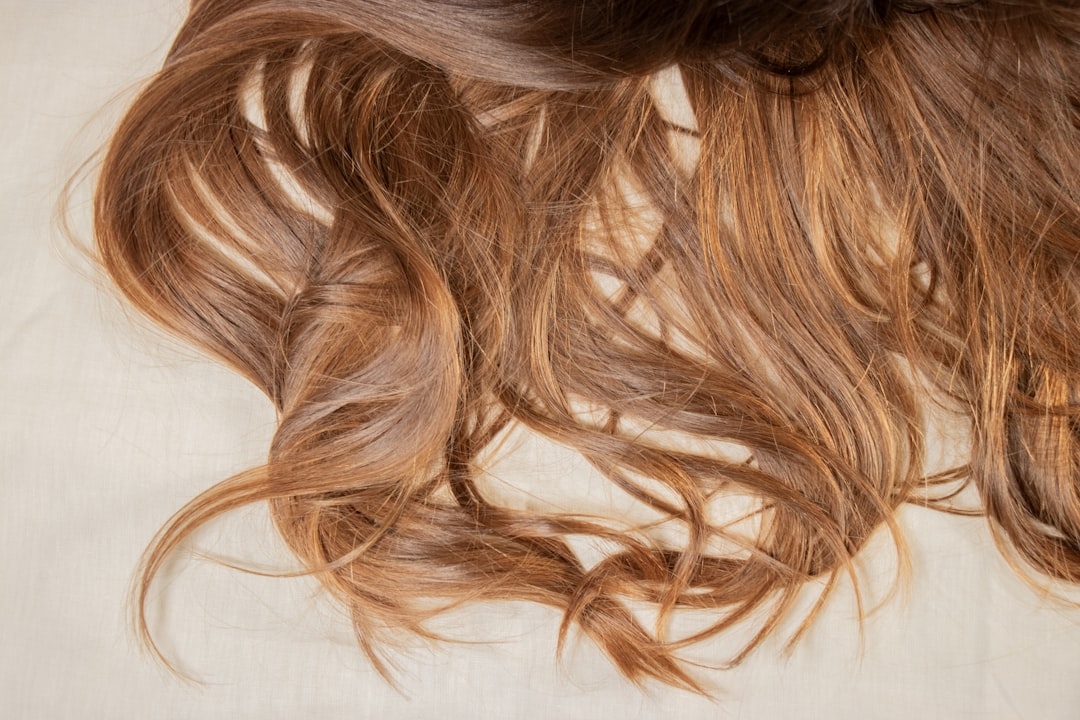
High-quality Remy human hair, such as that used by Ivana Farisei, offers the closest texture match to natural hair because it is cuticle-aligned and has not been heavily processed. Synthetic extensions and lower-grade human hair extensions are often processed in ways that alter the texture significantly, producing a silkiness that looks artificial on most natural hair types. Specifying the desired texture — straight, wavy, or with natural body — at the consultation stage, and selecting extension hair that matches the texture of the natural hair in its typical styled state, is the most effective way to address this factor.
Quick Cost Breakdown: Natural-Looking Extensions in 2026
Understanding the cost landscape helps set realistic expectations. The following ranges reflect 2026 UK prices for professional salon fitting:
- Nano bond extensions (specialist London salon, e.g. Ivana Farisei): £600–£1,400 for fitting; £80–£180 per maintenance appointment every six to eight weeks.
- Tape-in extensions (mid-range UK salon): £250–£600 for fitting; £60–£120 per repositioning appointment every six to eight weeks.
- Micro ring extensions (specialist salon): £350–£750 for fitting; £70–£150 per maintenance appointment every eight to ten weeks.
- Premium clip-in extensions (Remy human hair): £80–£350 for a set; no ongoing appointment cost, but requires correct daily application technique.
For clients considering nano bonds extensions, the combined cost of fitting plus two maintenance appointments over a six-month period at Ivana Farisei typically falls between £760 and £1,760 — a significant investment, but one that delivers a genuinely undetectable result that lasts the full period without visible deterioration when aftercare guidelines are followed. Over twelve months, with the Remy hair reapplied at the six-month point, the cost per month of wear compares favourably with the cumulative cost of repeated budget fittings that require replacement every two to three months.
The Sustainability Connection
The factors that make extensions look obvious are also, in most cases, the factors that shorten their usable lifespan. Extensions that are poorly colour-matched get replaced sooner. Extensions fitted with incorrect placement require earlier removal. Extensions made from lower-grade, heavily processed hair deteriorate faster and generate more frequent replacement cycles. From an environmental perspective, the choice to invest in high-quality, correctly fitted extensions — and maintain them properly — is not just aesthetically superior; it produces significantly less waste per year of wear.
Remy human hair, correctly cared for, can be repositioned and reused across multiple maintenance cycles before it reaches the end of its life. Ivana Farisei’s approach to sustainability includes using ethically sourced Remy hair, providing detailed aftercare guidance that extends the lifespan of each set, and offering a removal service that prioritises the preservation of both the extension hair and the natural hair for future use. Choosing a specialist salon is not just an aesthetic decision — it is a more considered choice in terms of the resources consumed per year of beautiful hair.
Troubleshooting: What to Do When Extensions Look Obvious
The colour is noticeably different from my natural hair
Book an urgent colour consultation at a specialist salon. A skilled colourist can often tone or gloss the natural hair to bring it closer to the extension colour, or advise on blending additional extension strands to bridge the gap. Going forward, a dimensional colour selection — such as the balayage and ombre finishes available from specialist salons — will provide more tolerance for natural variation in the base colour.
The bonds are visible through the hair when it moves
This is most commonly a placement issue from the original fitting, though it can also result from natural hair growth over time. A skilled specialist can assess whether the bonds need to be repositioned and, if so, carry out the adjustment as part of a maintenance appointment. In future fittings, communicate explicitly with the stylist about the hairstyles you typically wear so placement can account for the angles from which your hair is most visible.
The extensions look thicker and heavier than the rest of my hair
Volume calibration is the issue here. At the next maintenance appointment, ask the stylist to assess whether some bonds can be removed to reduce the overall density and better match the volume of the natural hair. This is a relatively straightforward adjustment at a high-quality salon and makes a significant difference to how naturally the result reads both in person and in photographs.
The extensions look obvious after I wash my hair
Extension hair and natural hair can behave differently after washing if they have significantly different moisture levels or texture. Ensure both the extension hair and natural hair receive the same conditioning treatment during the wash routine. Blow-drying the extensions and natural hair together — rather than letting one air-dry while heat-drying the other — helps establish a consistent texture and finish. A specialist styling lesson at a reputable extension salon can help clients who are struggling with post-wash blending develop a routine that works specifically for their hair type and extension method.
The Consultation as the Foundation of a Natural Result
Every section of this guide has described problems that originate, in large part, from an inadequate consultation process. Colour mismatch, placement errors, volume miscalibration, and texture contrast are all things that a skilled extensionist with sufficient consultation time will either prevent entirely or address as part of the fitting plan. The growing popularity of “express” or “walk-in” extension appointments — offered at lower price points by some UK salons — has corresponded directly with an increase in the kinds of obvious, disappointing results that give the extension industry a poor reputation.
A proper consultation for a new set of extensions should take at least thirty minutes and should cover the client’s natural hair type and density, typical styling habits, lifestyle factors such as exercise and swimming frequency, budget and maintenance expectations, and the specific visual outcome the client is hoping to achieve. Ivana Farisei includes a thorough consultation with every new client appointment, and stylists at the salon consistently attribute the quality of their results to the detail gathered at this stage rather than to any single technical element of the fitting itself.
Clients who book with Ivana Farisei for the first time frequently comment that the consultation is more thorough and illuminating than any they have experienced at previous salons — not just in terms of method selection, but in terms of receiving an honest, realistic picture of what the result will look like, how it will evolve over time, and what maintenance it will require. That transparency is the foundation on which a genuinely natural, enduring result is built.