Contents:
- Defining Salt and Pepper Hair
- Salt and Pepper vs. Grey vs. Completely Grey: The Distinction
- Salt and Pepper Hair
- Grey Hair
- Completely Grey or White
- Why Greying Happens and Why Some People Get Salt and Pepper
- The Biology of Greying
- Genetics and Greying Rate
- How to Style Salt and Pepper Hair Professionally
- Embracing the Natural Pattern
- Enhancing Salt and Pepper Hair Tone
- Expert Quote: From a UK Salon Stylist
- Comparison with Completely Dyed Grey Hair
- One Woman’s Journey: Transitioning to Salt and Pepper
- Caring for Salt and Pepper Hair: Practical Tips
- Common Misconceptions About Salt and Pepper Hair
- Myth: Salt and Pepper Looks Unkempt
- Myth: You Can’t Style Salt and Pepper Hair
- Myth: Salt and Pepper is Only For Older People
- FAQ: Salt and Pepper Hair Questions
- Is salt and pepper hair attractive?
- Should I colour salt and pepper hair or embrace it?
- Why does my salt and pepper hair look yellow?
- Can I dye only the pigmented hair to enhance salt and pepper?
- How do I transition gracefully to embracing natural salt and pepper?
You’ve likely seen it described in magazine features as “distinguished” or “sophisticated”—salt and pepper hair. But what exactly is salt and pepper hair, and how does it differ from simple greying? Salt and pepper refers to a specific pattern and balance of coloured and grey hair that creates a striking, often naturally blended appearance. Understanding the distinction helps you embrace your own greying pattern and style it effectively.
Defining Salt and Pepper Hair
Salt and pepper hair is a visual descriptor, not a technical hair classification. It refers to hair that has a balanced mix of pigmented (dark) hair and unpigmented (grey/white) hair, creating a speckled, salt-and-pepper-like appearance. The term implies:
- Even distribution: Grey and pigmented hair are distributed fairly evenly throughout the scalp, not concentrated in one area.
- Reasonable balance: Typically 30-70% grey, with enough pigmented hair remaining that the overall appearance is “mixed” rather than purely grey.
- Natural appearance: This pattern occurs from gradual, progressive greying over years—not from sudden greying or patchy alopecia areata.
Salt and Pepper vs. Grey vs. Completely Grey: The Distinction
Salt and Pepper Hair
30-60% grey mixed with 40-70% remaining pigmented hair. The result is a distinctive, multitonal appearance. Examples: someone with originally dark brown hair now showing 50% salt-and-pepper (roughly half brown, half grey), creating a unique “salt and pepper” blend.
Grey Hair
The term “grey” is actually misleading—hair doesn’t turn grey, it turns white. Grey is an optical illusion created when white (unpigmented) hair and pigmented hair are mixed. True “grey” hair contains 90%+ white hair, creating the visual impression of grey tone. The pigmented hair remaining provides the “grey” tint; pure white hair would appear totally white.
Completely Grey or White
Rare in practice, “completely grey” means 99%+ white hair with virtually no pigment. This usually occurs in people aged 60+. The visual result is silvery-white or pure white, depending on hair texture and lighting.
Why Greying Happens and Why Some People Get Salt and Pepper
The Biology of Greying
Hair colour is determined by melanin produced by melanocyte cells in the hair follicle. With age, melanocytes gradually stop producing melanin—the exact mechanism isn’t fully understood, but involves oxidative stress, hydrogen peroxide accumulation in follicles, and telomerase enzyme decline. As melanocytes stop functioning, new hair grows without pigment, appearing white.
Timeline: Greying typically begins in the 30s-40s, progresses gradually through the 40s-60s, and often completes by age 70-80. Individual variation is enormous—some people grey rapidly (30-40% by age 40), others slowly (minimal greying by age 50).
Genetics and Greying Rate
Genetics determine when you’ll grey and how quickly. If your parents greyed early, you likely will too. Ethnicity also influences timing: Caucasians typically grey earlier (30s-40s), Asians slightly later (30s-40s), and people of African descent often later (40s-50s). These are averages with enormous individual variation.
The reason some people develop salt-and-pepper patterns specifically is the randomness of melanocyte decline. Not all melanocytes stop simultaneously—some hair follicles cease production while others continue, creating a mixed pattern. With gradual greying over years, you get the balanced “salt and pepper” appearance.
How to Style Salt and Pepper Hair Professionally
Embracing the Natural Pattern
Many people with salt-and-pepper hair choose to embrace it rather than colour it. This approach has gained popularity—silvery, multi-tonal hair is increasingly viewed as sophisticated.
Best hairstyles for salt and pepper hair:
- Short, textured cuts: Pixie cuts or short textured bobs (2-3 inches) showcase the salt-and-pepper pattern beautifully. Texture creates visual interest, making the multi-tonal nature more striking.
- Medium bobs with face-framing: Layers and movement add dimension to salt-and-pepper hair, preventing a flat appearance. Chin-length bobs with side-swept bangs work well.
- Longer hair with texture: Waves, curls, or loose braids add movement, making the mixed tones more visually dynamic than straight hair.
- Avoid: Severely straight, sleek styles can emphasise any patchiness and make salt-and-pepper hair look dull. Texture is your ally.
Enhancing Salt and Pepper Hair Tone
Many people want to accentuate their salt-and-pepper without fully colouring it. Options include:
- Toning treatments: Violet or ash-toned shampoos and conditioners neutralise yellowing (which makes salt and pepper look brassy instead of silvery-white). Products like Fanola No Yellow (£8-12) or Joico Blonde Life (£10-15) maintain a cooler, more silvery tone.
- Partial highlights: Some people add subtle highlights to enhance dimension. A few face-framing highlights in a slightly lighter shade (natural ash or silver blonde) can make salt-and-pepper more striking. Cost: £50-150 depending on salon and extent.
- Lowlights for depth: Adding subtle darker tones in select areas can increase contrast, making the mixed hair more visually interesting.
Expert Quote: From a UK Salon Stylist
Rebecca Chen, Creative Director at Vidal Sassoon London, says: “Salt-and-pepper hair is gorgeous when styled right. The key is working with the natural pattern, not against it. Texture is essential—smooth, sleek styles flatten the beauty of the mixed tones. I always recommend layers, movement, or texture for salt-and-pepper clients. A proper cut with shape makes all the difference. Additionally, using purple-toning products monthly keeps the grey looking silvery instead of yellowish-brassy.”
Comparison with Completely Dyed Grey Hair
Some people dye their hair to intentionally create a grey or “silver” look, distinct from natural salt-and-pepper greying. Comparison:
Natural salt and pepper: Mixed pigmented and white hair, varying ratios. Requires no colouring. Looks natural but may appear uneven or patchy depending on distribution. Grey roots don’t show because you’re already greying naturally.
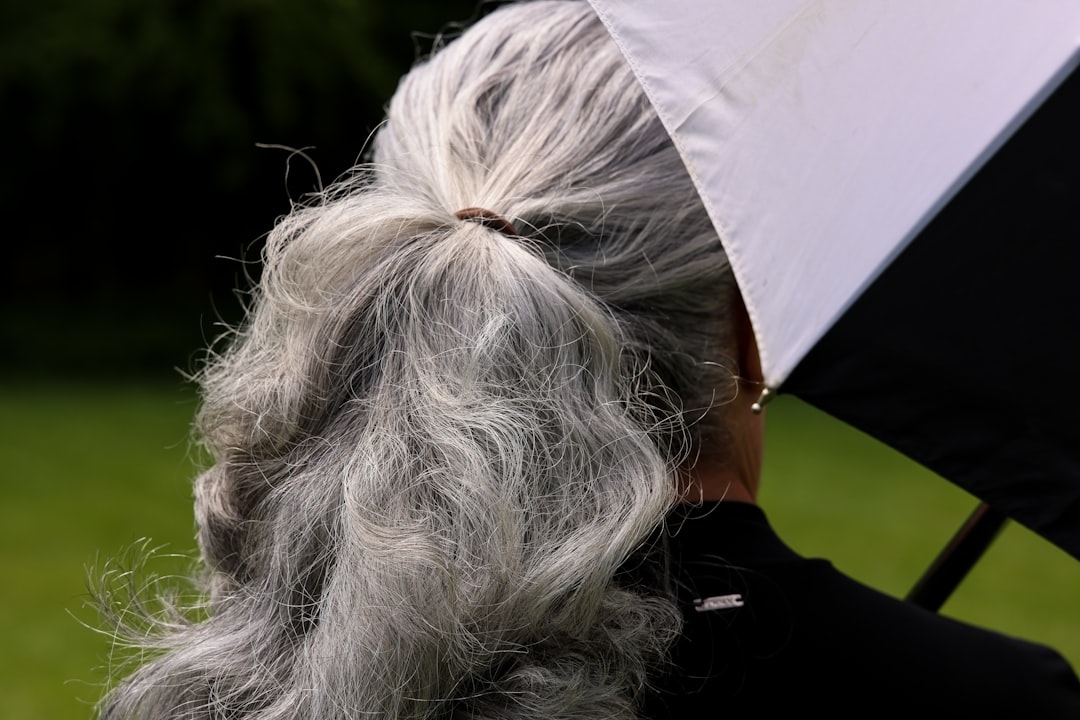
Intentionally dyed grey (often called “grey” or “ash” hair): Entire hair uniformly dyed to a grey or ash tone. Requires bleaching to pale blonde, then toning with ash/grey tones. Requires monthly toning to maintain. More uniform appearance but requires more maintenance.
Many people with natural salt-and-pepper hair prefer it to intentionally dyed grey because it requires no maintenance and looks naturally blended.
One Woman’s Journey: Transitioning to Salt and Pepper
Fiona, 48, from Edinburgh began greying in her early 40s. “I coloured my hair to cover it for years—monthly roots were frustrating and expensive,” she recalls. By age 47, she was mostly grey with patches of brown. “I decided to let it grow out naturally. The transition period was awkward—visible roots for about 6 months as my dark dyed hair grew out and was cut away.”
Now, a year later, Fiona has natural salt-and-pepper hair. “It’s a mixture of about 60% grey and 40% remaining brown pigment. I got a short, textured pixie cut that makes the mixed tones look intentional and trendy rather than random. Using purple-toning shampoo keeps it silvery, not brassy. I’m saving £150 annually on colouring, and honestly, I feel more confident. The salt-and-pepper looks sophisticated, and zero maintenance is a bonus.”
Caring for Salt and Pepper Hair: Practical Tips
- Purple-toning shampoo monthly: £8-12 per bottle, lasts several months. Neutralises yellow tones that accumulate in white hair, maintaining a silvery appearance.
- Quality conditioner: White hair is often drier (less sebum reaches unpigmented hair). Good conditioning prevents dryness and brittleness. Cost: £5-12 per bottle.
- Professional cuts every 6-8 weeks: £35-80 depending on location. Texture and shape are critical for showcasing salt-and-pepper beautifully.
- Minimal heat styling: Salt-and-pepper hair (particularly the white/grey portions) is more fragile. Limit blow-drying and styling tools.
- Avoid harsh shampoos: Sulphate-free shampoos preserve natural oils, crucial for hair health as you age.
Common Misconceptions About Salt and Pepper Hair
Myth: Salt and Pepper Looks Unkempt
False. With the right cut, styling, and maintenance, salt-and-pepper hair looks intentional and professional. Short, textured cuts showcase the pattern beautifully. Poor maintenance (yellowing, lack of shape) looks unkempt; proper care looks polished.
Myth: You Can’t Style Salt and Pepper Hair
False. Salt-and-pepper hair can be styled in virtually any way—ponytails, braids, buns, waves. Texture adds visual interest. Some styles (sleek, flat) suit salt-and-pepper less well than others (textured, layered), but styling options are abundant.
Myth: Salt and Pepper is Only For Older People
False. Early greyness is increasingly common. People in their 30s-40s go grey, and salt-and-pepper hair on younger people looks distinctive and trendy rather than “old.”
FAQ: Salt and Pepper Hair Questions
Is salt and pepper hair attractive?
Attractiveness is subjective, but salt-and-pepper hair has become increasingly fashionable. Many people find it distinctive and sophisticated. The key is styling it well—a proper cut and maintenance matter.
Should I colour salt and pepper hair or embrace it?
That’s personal preference. Colouring requires ongoing maintenance (£40-100 monthly) and upkeep. Embracing it requires no colouring but does require proper styling and purple-toning maintenance. Either approach works—choose based on your preference and lifestyle.
Why does my salt and pepper hair look yellow?
White hair absorbs yellow tones from the environment, products, and mineral deposits in water. This creates a brassy appearance. Purple-toning shampoo neutralises this yellowness, restoring silvery tones.
Can I dye only the pigmented hair to enhance salt and pepper?
This is complicated and usually doesn’t work well. Partial dyeing of mixed hair often looks unintentional or patchy. If you want to enhance definition, subtle lowlights (added darker tones) work better than trying to dye specific sections.
How do I transition gracefully to embracing natural salt and pepper?
Grow out your dyed hair while gradually cutting away the coloured portions. This takes 6-12 months depending on how much coloured hair you have. A good stylist can time cuts to minimise the awkward transition phase. Once you reach natural salt-and-pepper, get a fresh cut that works with the pattern.
Salt and pepper hair is a beautiful, natural stage of greying where pigmented and white hair coexist in a balanced pattern. Embracing it requires proper styling (texture, shape), maintenance (purple-toning shampoo, quality conditioner), and the right attitude. With care, salt-and-pepper hair looks sophisticated and striking—whether you choose to colour it or embrace the natural pattern.